Every Missed Call Is a Missed Paycheck — Here's What It's Really Costing Your Business
That moment your phone rings and nobody picks up? It's not just inconvenient — it could be the most expensive few seconds in your workday.

Every Missed Call Is a Missed Paycheck — Here's What It's Really Costing Your Business
Picture this: a homeowner's AC unit dies on the hottest day of summer. They grab their phone and start calling HVAC companies. The first one rings four times and goes to voicemail. So they hang up — and dial the next number on the list.
That first company never even knew they lost a job. But they did.
This plays out thousands of times a day across every industry imaginable — plumbers, dentists, law offices, salons, contractors, real estate agents, and more. A phone rings. Nobody answers. A customer moves on.
And yet, most small business owners have no idea how much this is quietly costing them.
The Numbers Are Hard to Ignore
Let's talk real numbers for a second.
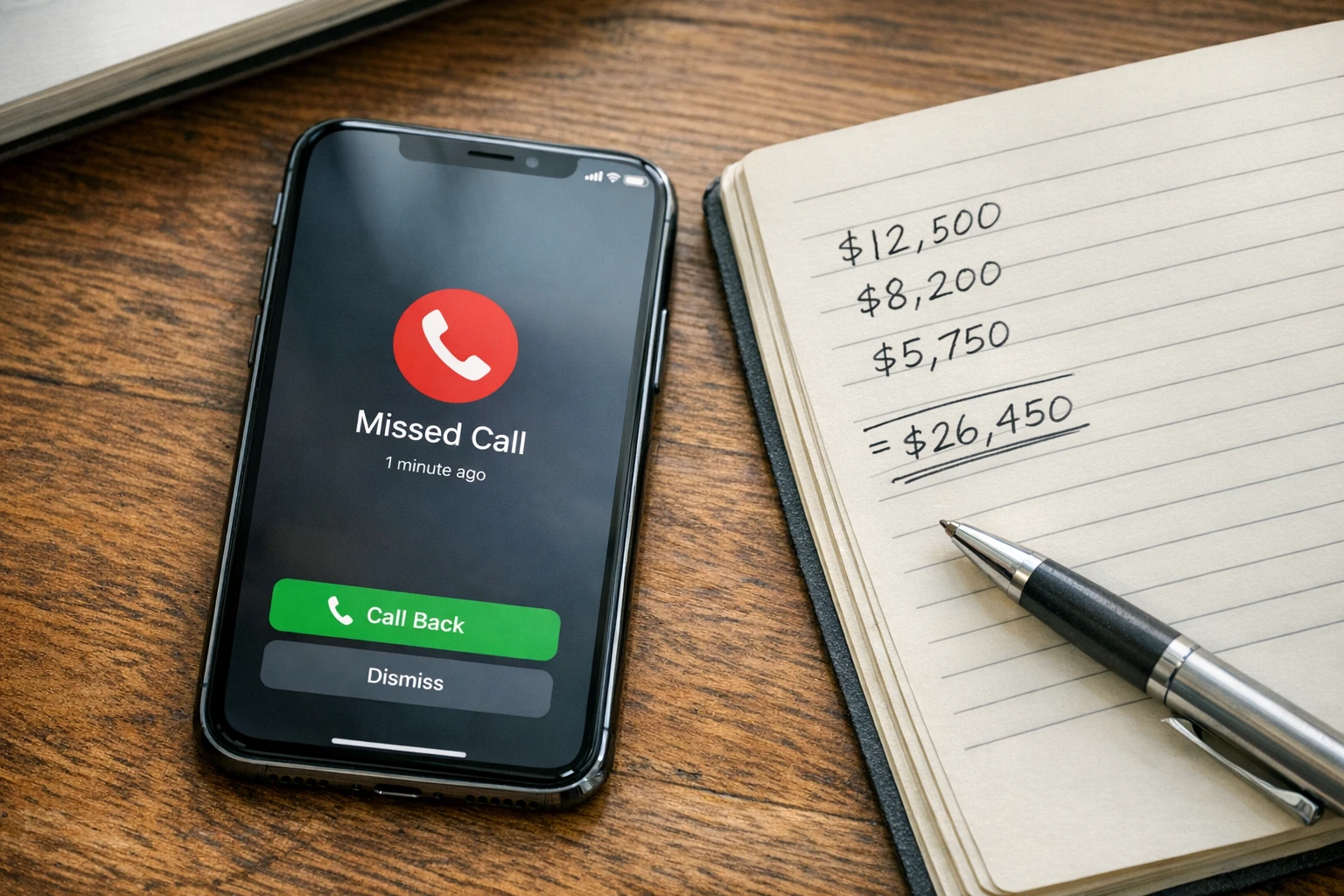
Studies consistently show that 62% of calls to small businesses go unanswered. That's nearly two out of every three calls — gone. And here's the part that stings: 80% of callers who reach voicemail simply hang up without leaving a message. They don't try again later. They don't send an email. They just move on.
Think about your own average job or sale. Whether you run a landscaping company, a dental clinic, or a custom cabinetry shop, a single customer is often worth hundreds — sometimes thousands — of dollars. Now multiply that by the number of calls you miss every week.
For many small businesses, that math adds up to tens of thousands of dollars in lost revenue every single year. Revenue that was one answered call away.
"They'll Leave a Message" — Except They Won't
There's a common assumption among small business owners: if it's important, they'll leave a voicemail.
It feels logical. But it's not how people actually behave.
Today's customers — especially younger ones — expect immediacy. They're not going to sit through a voicemail greeting, fumble for something to write with, and leave their number. Not when they can just tap the next result in Google Maps and reach someone who actually picks up.
Voicemail has become a signal, not a solution. When a customer hears that beep, what they're really hearing is: "This business is too busy for me." Or worse: "I'm not sure this business is even open."
The moment of intent — when someone picks up the phone to call you — is your highest-value opportunity. The window is tiny. If you're not there to catch it, it closes fast.
Your Competitor Is One Ring Away
Here's what makes missed calls especially brutal for small businesses: you're rarely the only option.
When a customer searches for a plumber or a family law attorney or a local bakery that does custom cakes, they usually have a handful of results. They're not loyal to anyone yet. They're just looking for the first person who can help them.
If you don't answer, that's not a voicemail — that's a referral to your competitor.
And the businesses that do answer? They win the job, the appointment, the sale. Consistently. Over time, the businesses that reliably answer their phones build a reputation for being responsive and professional. The ones that don't slowly lose ground, even if their actual work is better.
Answering the phone isn't just a customer service task. It's a competitive advantage.
After Hours: Where the Real Problem Hides
Most small business owners think about missed calls during business hours — the ones that slip through when everyone's on another line or out on a job.
But the after-hours window is where the problem is often worst.
Think about when people actually make calls. They're researching services in the evening after dinner. They're calling about a leak at 7am before heading to work. They have a dental emergency on a Saturday. These calls happen outside the 9-to-5 window — and they're often the highest-urgency, highest-intent calls you'll ever get.
If your phone just rings out to voicemail at 6:30pm on a Tuesday, that person isn't waiting until tomorrow morning. They're finding someone else tonight.
The Reputation Cost Nobody Talks About
Beyond the direct revenue loss, there's a slower, quieter cost: what missed calls do to your reputation over time.
Customers who can't reach you don't always move on quietly. Sometimes they leave a review. "Called three times, never heard back." "Went to voicemail every time." One or two of those and your star rating starts to slide — and so does the trust of every future customer who reads them.
Even customers who do eventually reach you might remember the friction. A business that's hard to get ahold of feels unreliable, even if the work itself is flawless. First impressions stick, and for most customers, the phone call is the very first impression.
So What's the Fix?
The obvious answer is "hire someone to answer the phones." But for most small businesses, that's not realistic. A full-time receptionist is expensive. Part-time help still means gaps. And juggling calls while you're on a job site or with a patient or in a meeting isn't sustainable.
This is exactly why more small businesses are turning to AI-powered call answering — and why it works so well in practice.
An AI receptionist can answer every call, every time — during business hours, after hours, weekends, holidays. It can greet callers by name if they're return customers, collect the information you need, schedule appointments, answer common questions, and instantly notify you about urgent calls.
It's not a voicemail. It's not a hold queue. It's a real conversation that gives your customer the feeling that they reached someone — because in a meaningful sense, they did.
Everdesk is built specifically for this. Our AI handles your incoming calls so nothing slips through the cracks, no matter when the phone rings or how slammed you are. You stay focused on the work. Your customers feel taken care of. And you stop leaving money on the table.
The Bottom Line
Missed calls aren't a minor inconvenience. They're a slow leak in your business — draining revenue, handing customers to competitors, and quietly eroding the reputation you've worked hard to build.
The good news? It's one of the easiest problems to solve once you actually look at it.
Every call that rings is someone who chose your business. Give them a reason to stay.
Ready to stop missing calls? See how Everdesk works — and start turning every ring into a real opportunity.