Every Channel, One Conversation: Why Omnichannel Support Is No Longer Just for Big Brands
Your customers reach out by text, email, social media, and phone — often on the same day. The small businesses winning right now are the ones that make every channel feel like one seamless conversation.
Every Channel, One Conversation: Why Omnichannel Support Is No Longer Just for Big Brands
Picture this: a customer texts your business to ask about hours. No reply comes, so they call and leave a voicemail. Still nothing, so they shoot a message through your Facebook page. By the time someone on your team finally responds — three hours later, via Facebook — the customer has already booked with your competitor.
Sound familiar?
Here's the kicker: your team didn't ignore them on purpose. The text went unseen because it landed in a personal number no one monitors after noon. The voicemail got buried. The Facebook message sat in a "Message Requests" folder nobody knew existed.
That's not a staffing problem. It's a communication infrastructure problem — and it's one the biggest brands in the world solved years ago. Small businesses are just now catching up. The ones that do it first win.
What "Omnichannel" Actually Means
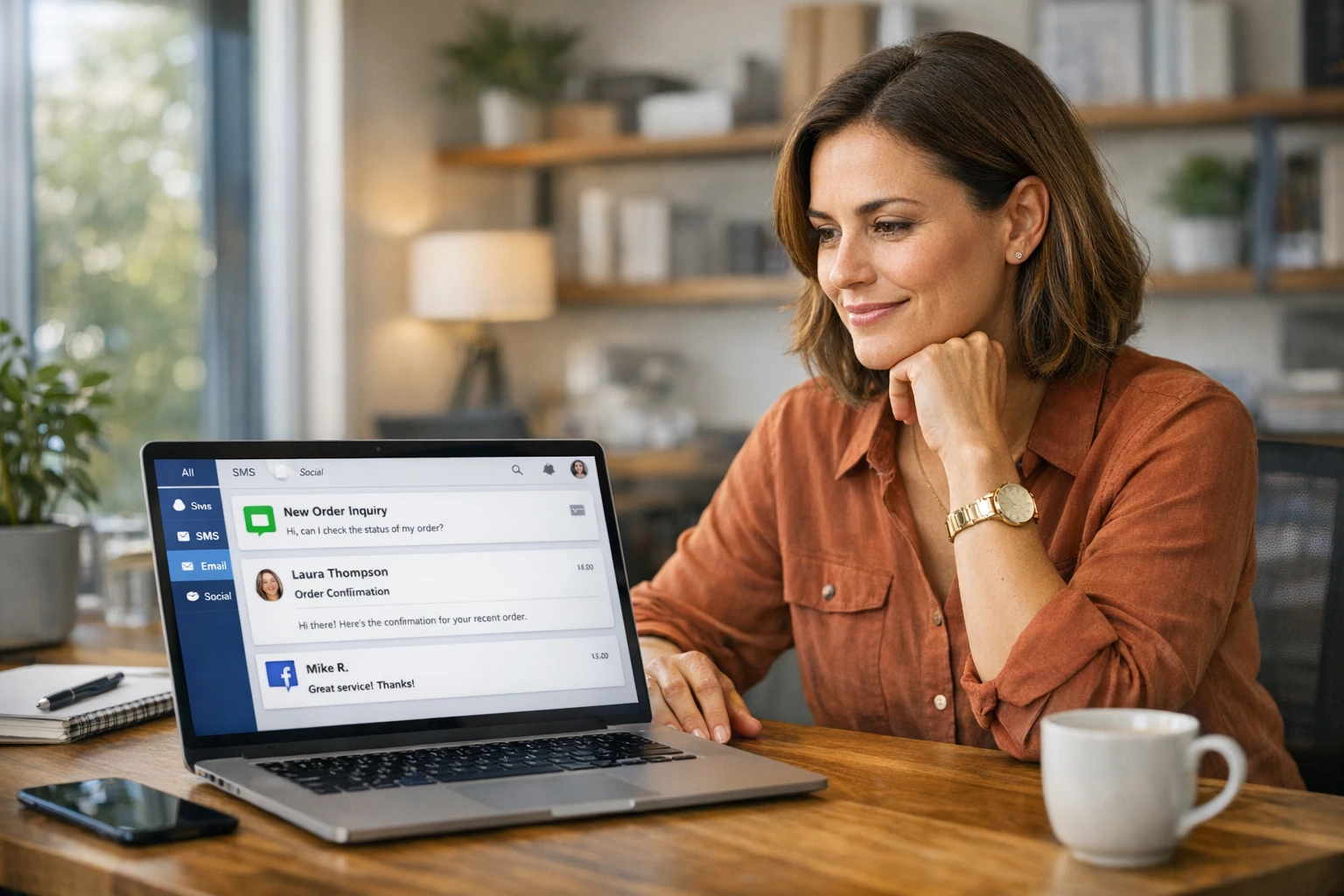
Forget the buzzword. Omnichannel simply means your customers can reach you however they want — text, phone, email, social media — and it all comes together in one place where your team can see it, respond to it, and track it.
It's the difference between a customer having to repeat themselves every time they switch channels ("Hi, I texted earlier about…") versus your team picking up exactly where the last conversation left off, regardless of how it started.
For large companies, this is table stakes. They have dedicated platforms, dedicated teams, and dedicated budgets. But for small and mid-size businesses, it's historically felt out of reach — too expensive, too complicated, or just not worth the trouble.
That's changed. And the cost of ignoring it has never been higher.
What It's Actually Costing You
Most business owners don't realize how much revenue they're leaving on the table from fragmented communication — because the losses are invisible. A missed text doesn't show up on a report. A Facebook message left unread for two days doesn't trigger an alert. You just never hear from that customer again, and you assume they went in a different direction.
In reality, 42% of customers who don't get a timely response on their preferred channel simply don't reach out again. They don't escalate. They don't complain. They leave quietly.
And the customers who do stick around still pay a price. When someone has to re-explain their situation every time they switch channels — or track down an employee who handled it last time — it creates friction. Friction kills trust. And trust is what keeps small businesses alive.

What Your Customers Are Actually Experiencing
Put yourself on the other side of the counter for a moment.
You're a homeowner who just hired a local contractor to do some work. You have a quick question about the timeline. You text. No reply for six hours. You call — it rings out. You check their website, find a contact form, fill it out, and get an auto-response that says "We'll get back to you within 2 business days."
You're not angry. You're just quietly updating your mental model of this business: disorganized, hard to reach, probably not someone I'll hire again.
Now imagine the same contractor, but every time you reach out — text, call, or email — someone gets back to you within minutes, the conversation picks up naturally without you having to explain the backstory, and the whole thing feels effortless.
Same quality of work. Completely different experience. One of those contractors gets the referral. One doesn't.
How It Works in Practice for Small Businesses
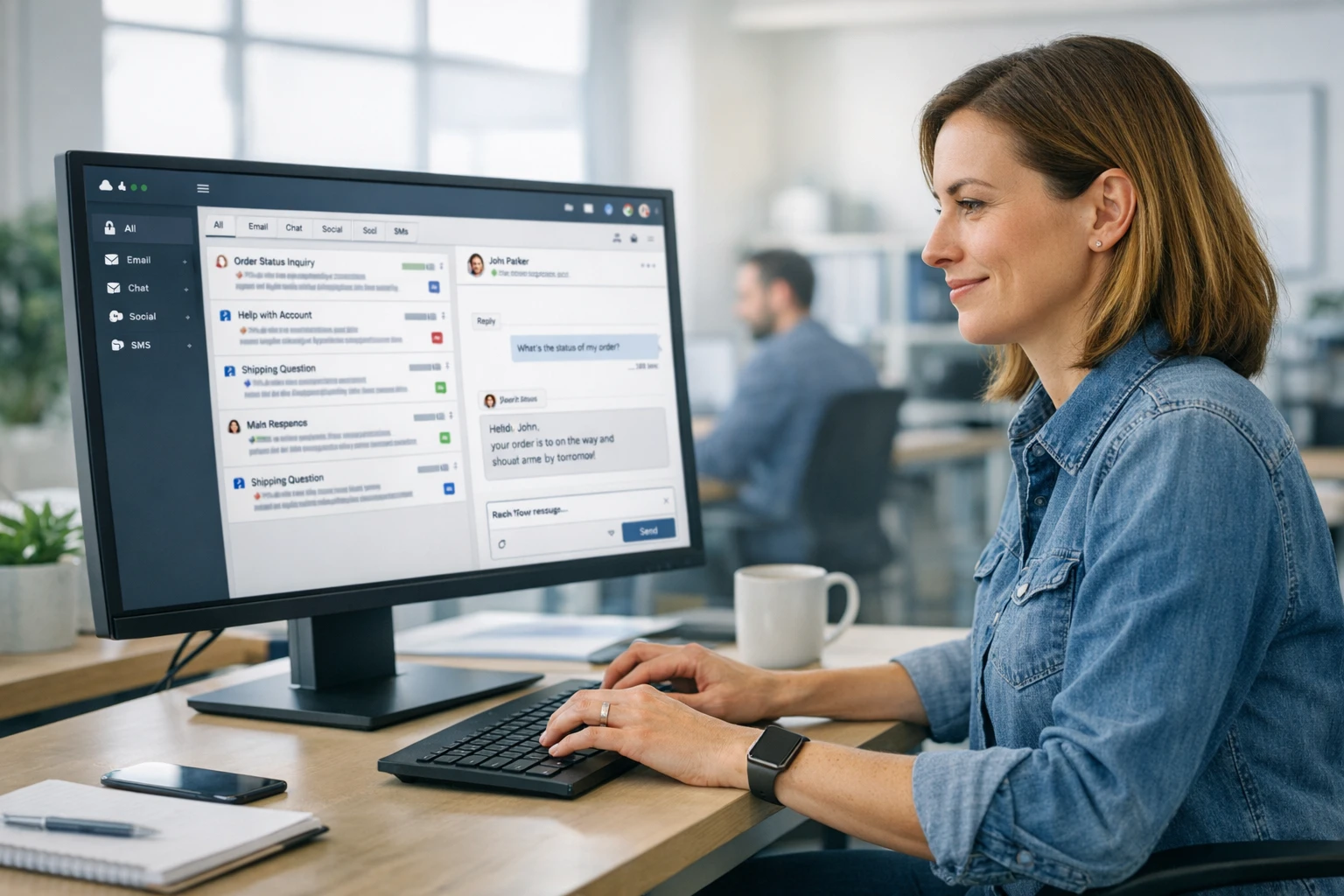
You don't need an enterprise software budget or a full-time support team to operate like this. What you need is a single inbox that pulls in every channel — and a system that makes sure nothing slips.
Here's what that looks like in practice:
One place for everything. Texts, calls, emails, and social messages all land in the same dashboard. Whoever is on that day picks them up, responds, and moves on. No digging through personal phones. No missed Facebook requests.
Context that travels with the customer. When a customer who texted last week calls today, the conversation history is right there. Your team knows who they are, what they asked, and what was resolved — without the customer having to repeat a word.
Faster responses without more headcount. Automated first responses acknowledge the message instantly and set expectations while a human follows up. That alone eliminates most of the "they never got back to me" complaints.
Coverage that doesn't depend on one person. If the person who usually handles texts is out, messages don't pile up unanswered. Any team member can see the queue and respond.
The Businesses Winning Right Now Have Already Made This Switch
Omnichannel isn't a competitive advantage anymore — it's table stakes for any business that wants to be taken seriously. Customers have been trained by large brands to expect seamless, responsive communication across every channel. When a small business delivers that same experience, it doesn't just satisfy customers — it surprises them. And surprised, delighted customers become loyal ones.
The gap between businesses that have done this and those that haven't is growing every month. The good news: it's not too late, and it's not nearly as complicated as it used to be.
Ready to stop losing customers to missed messages and fragmented inboxes? Start your free trial of Everdesk and see how easy it is to bring every customer conversation into one place.